

Ceiling leak, stain or sag? Help is one call away
Water damage on a ceiling? Stop it, dry it & fix it right.
Brown stains, bubbling paint, sagging drywall or water dripping through: find out what it means, how urgent it is and where it is coming from, then get it handled with one call.
- Leaks, stains & sagging ceilings
- Drying & mold prevention
- Drywall & ceiling repair
Talk to someone now
Water coming through your ceiling?
- 1Keep everyone out from under the wet or sagging area.
- 2Don't touch wet lights or switches.
- 3Shut off the water if you can do it safely.
- 10Ceiling problems explained
- 10Leak sources covered
- 7Ceiling types and rooms
- 10Repair guides and tools
Recognize the damage
What ceiling water damage looks like
Tap a sign to see what it means and what to do next.
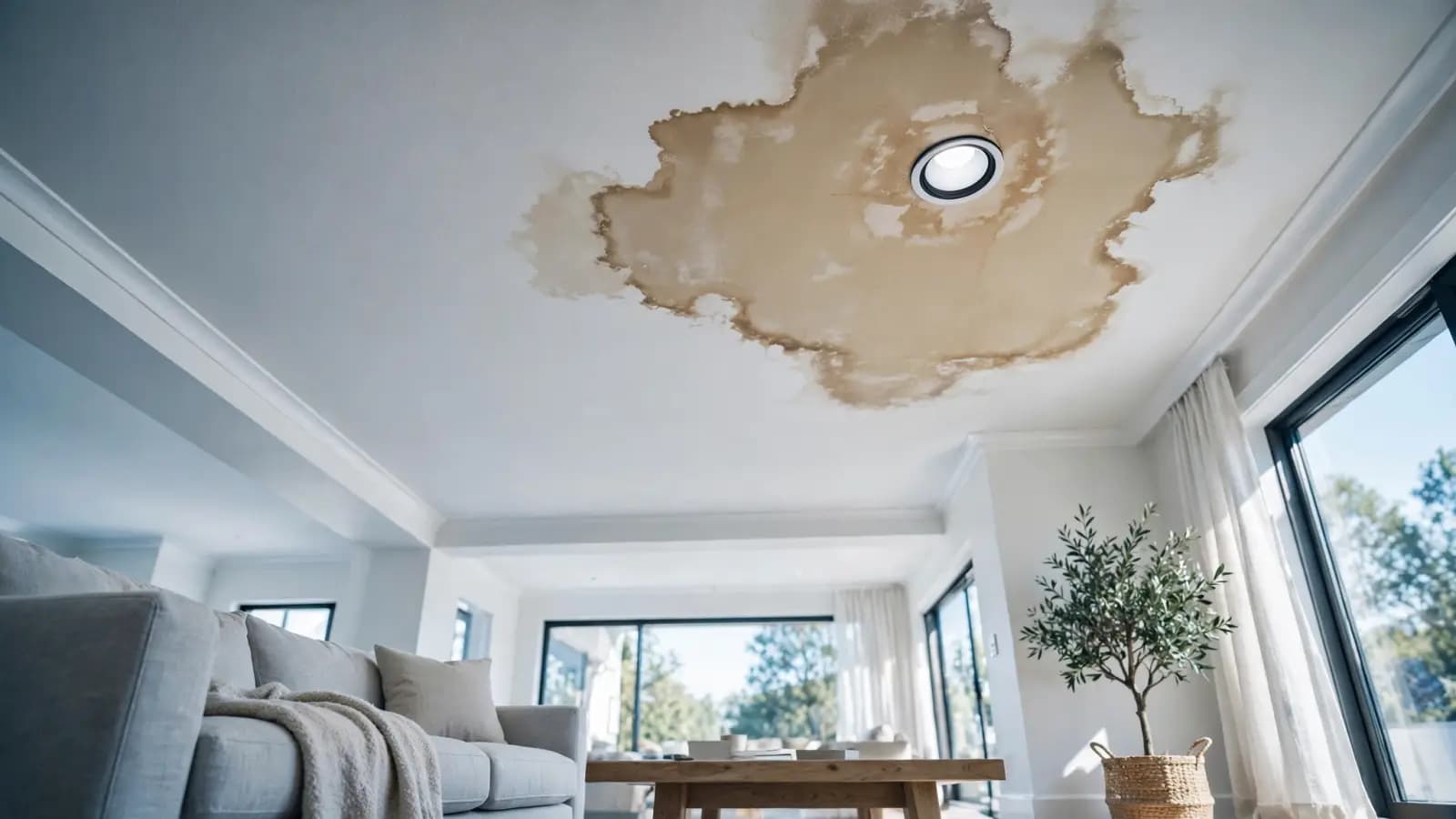
Ceiling water damage repair
Whatever the damage, start here
Each page explains when the service is needed, how the work is done, what affects the cost and what you can safely do yourself.
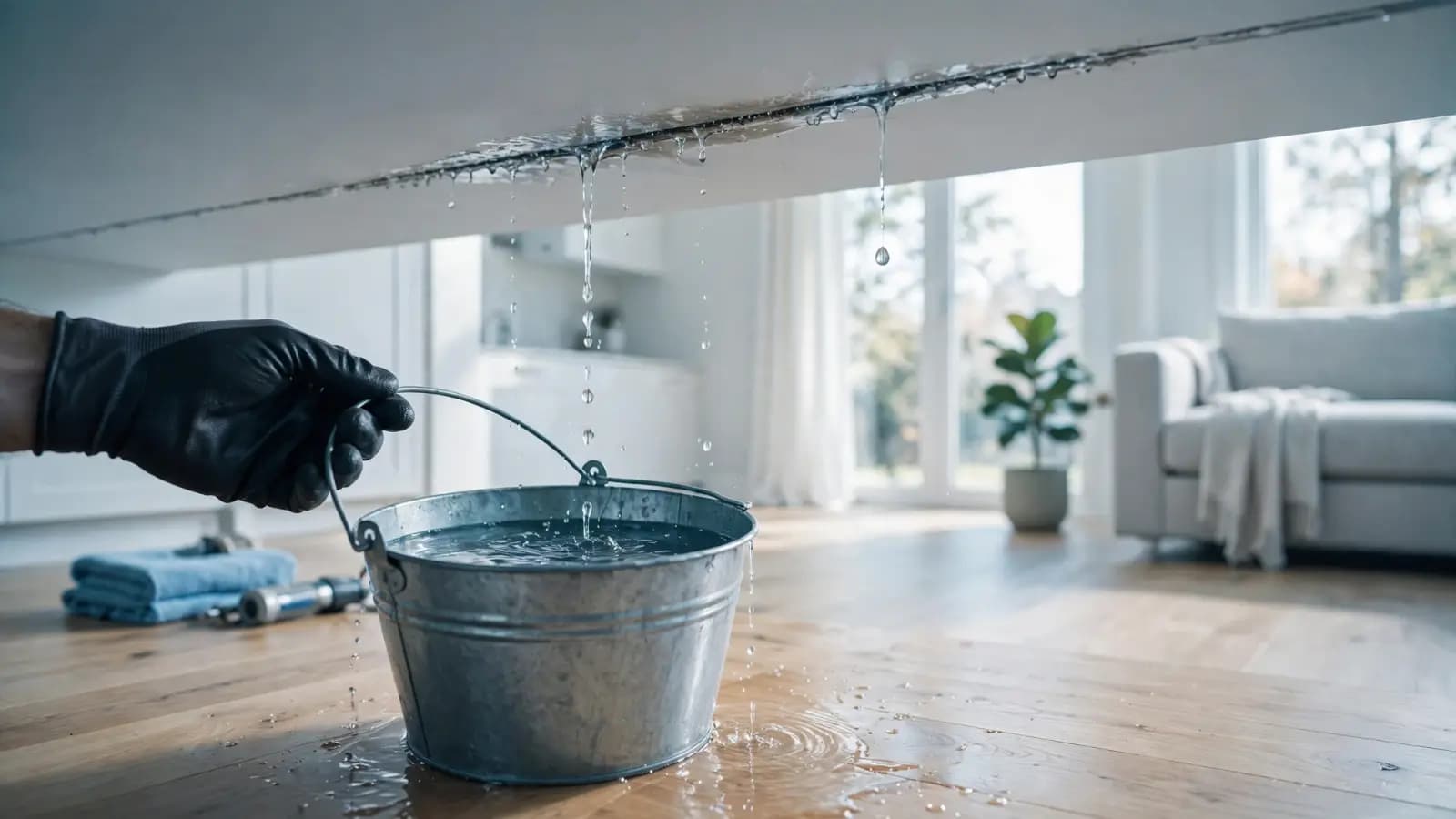
Emergency Ceiling Water Damage
Water pouring through, a bulging ceiling, or water near a light: move people away, avoid wet electrical fixtures, stop the source if it is safe, contain the water, then call for help.
Learn more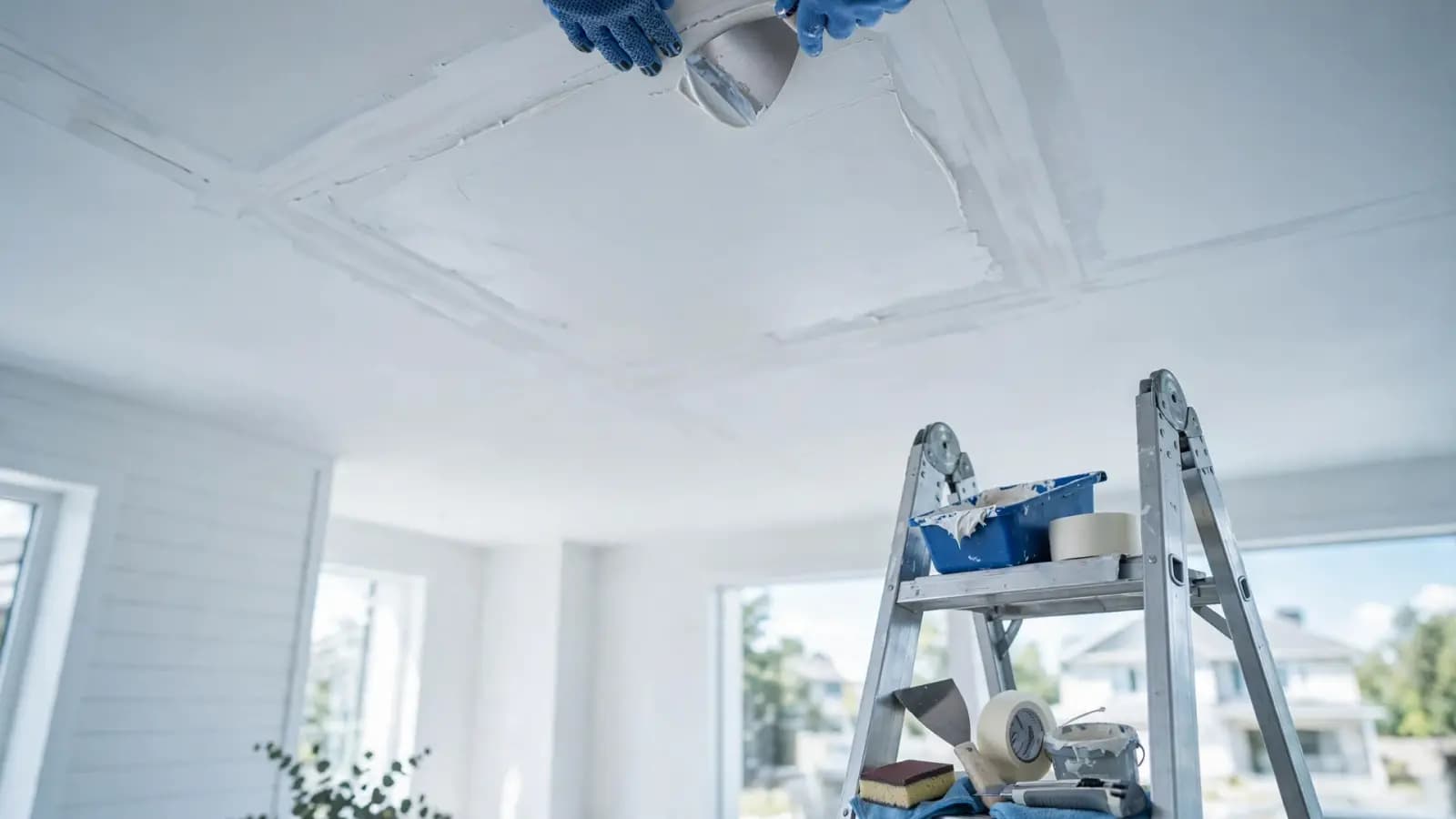
Ceiling water damage repair
Learn more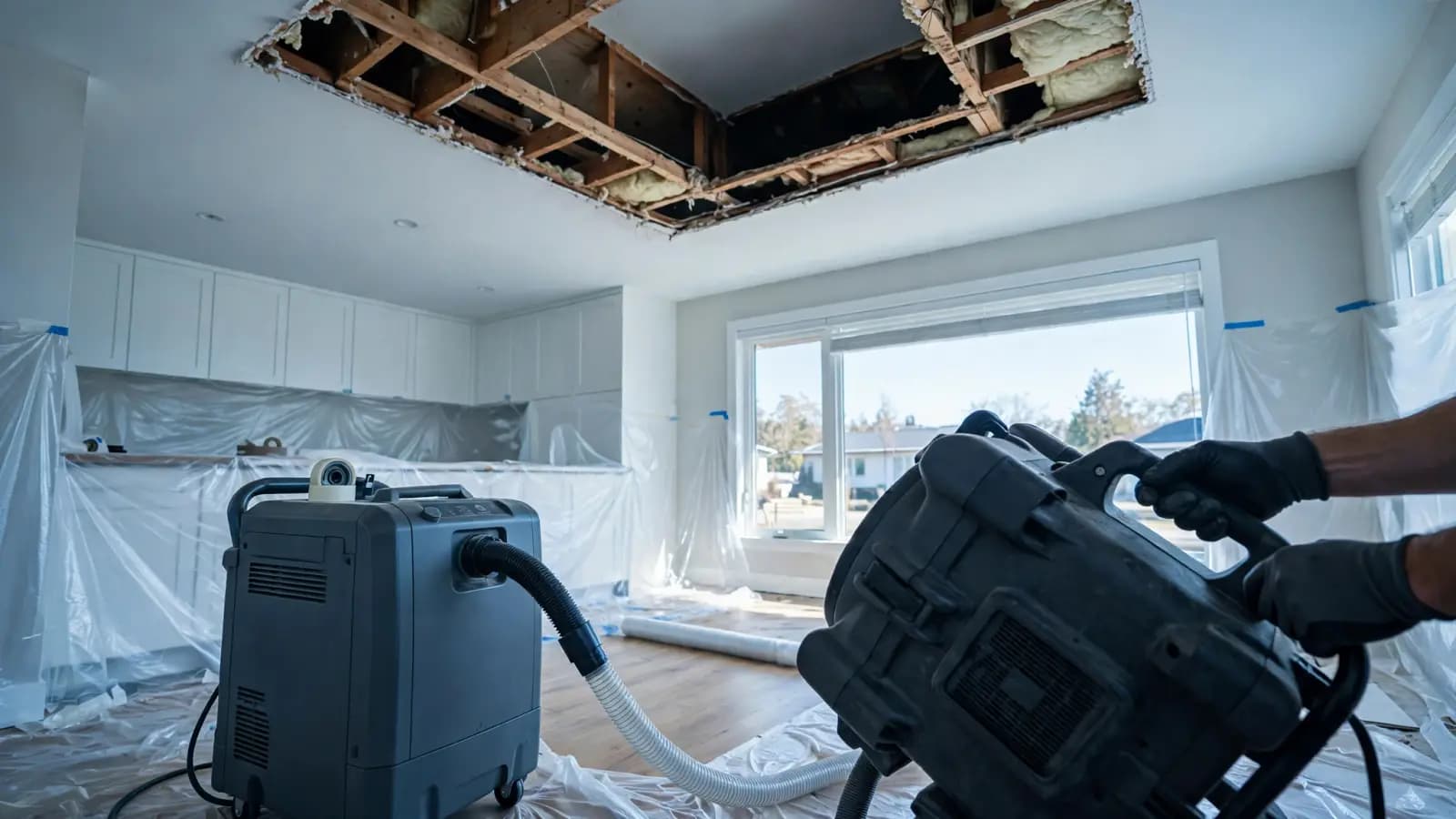
Water damage drying
Learn more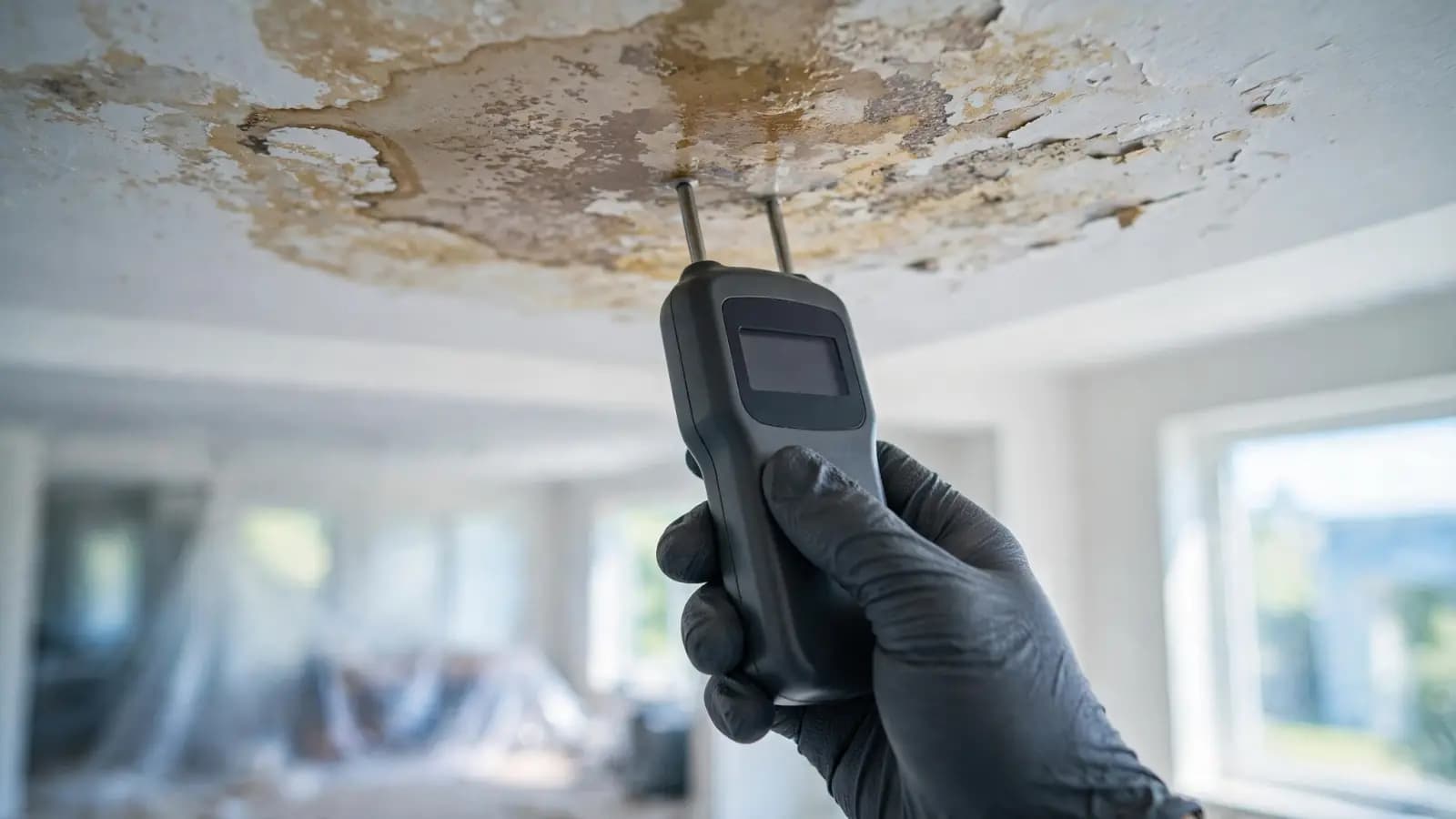
Leak detection
Learn more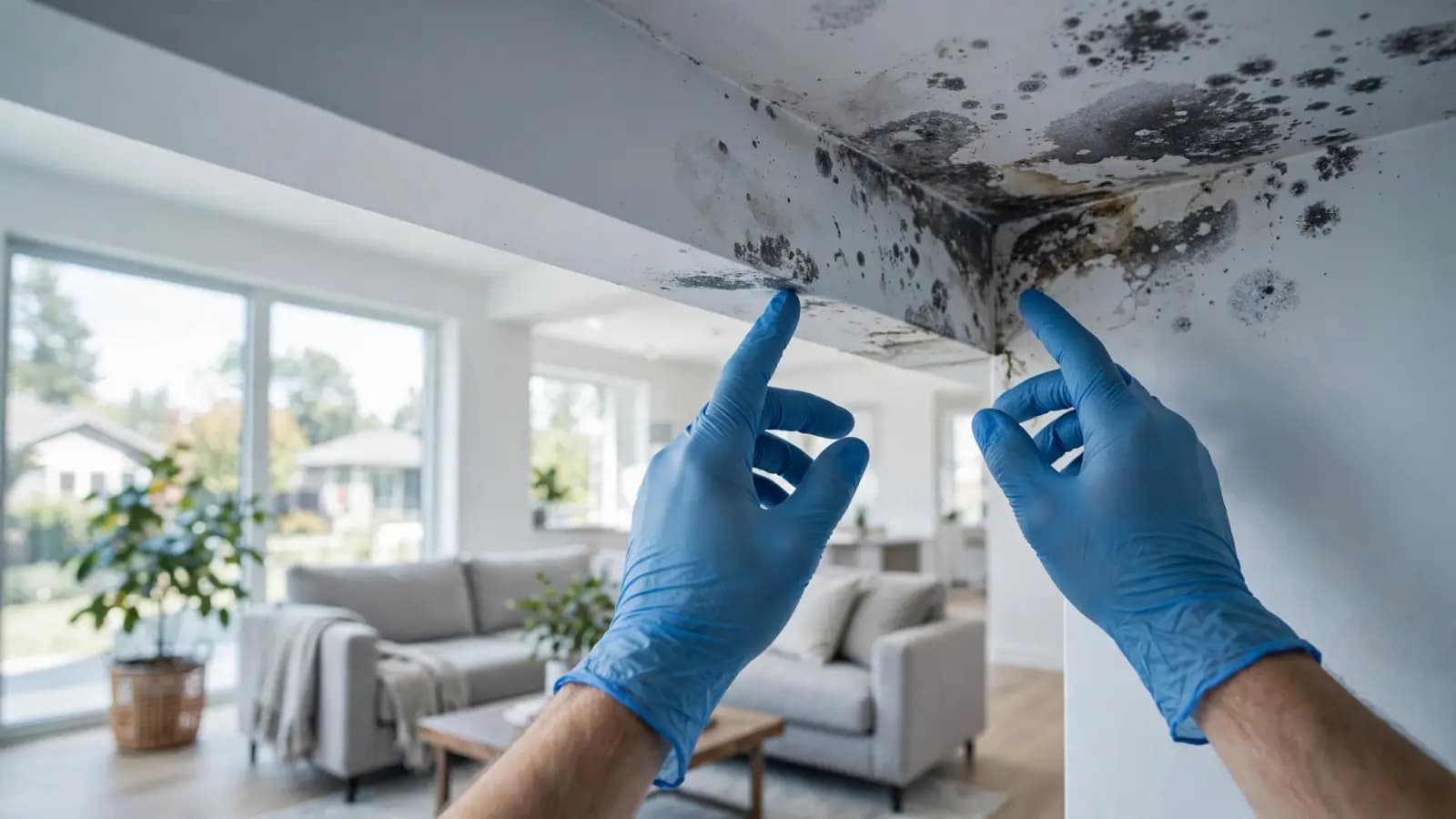
Mold remediation
Learn more- Drywall ceiling repairPatching or replacing ceiling drywall after drying, and matching finish and texture.
- Water damage cleanupExtraction, debris removal and contaminated-water cleanup after a ceiling leak.
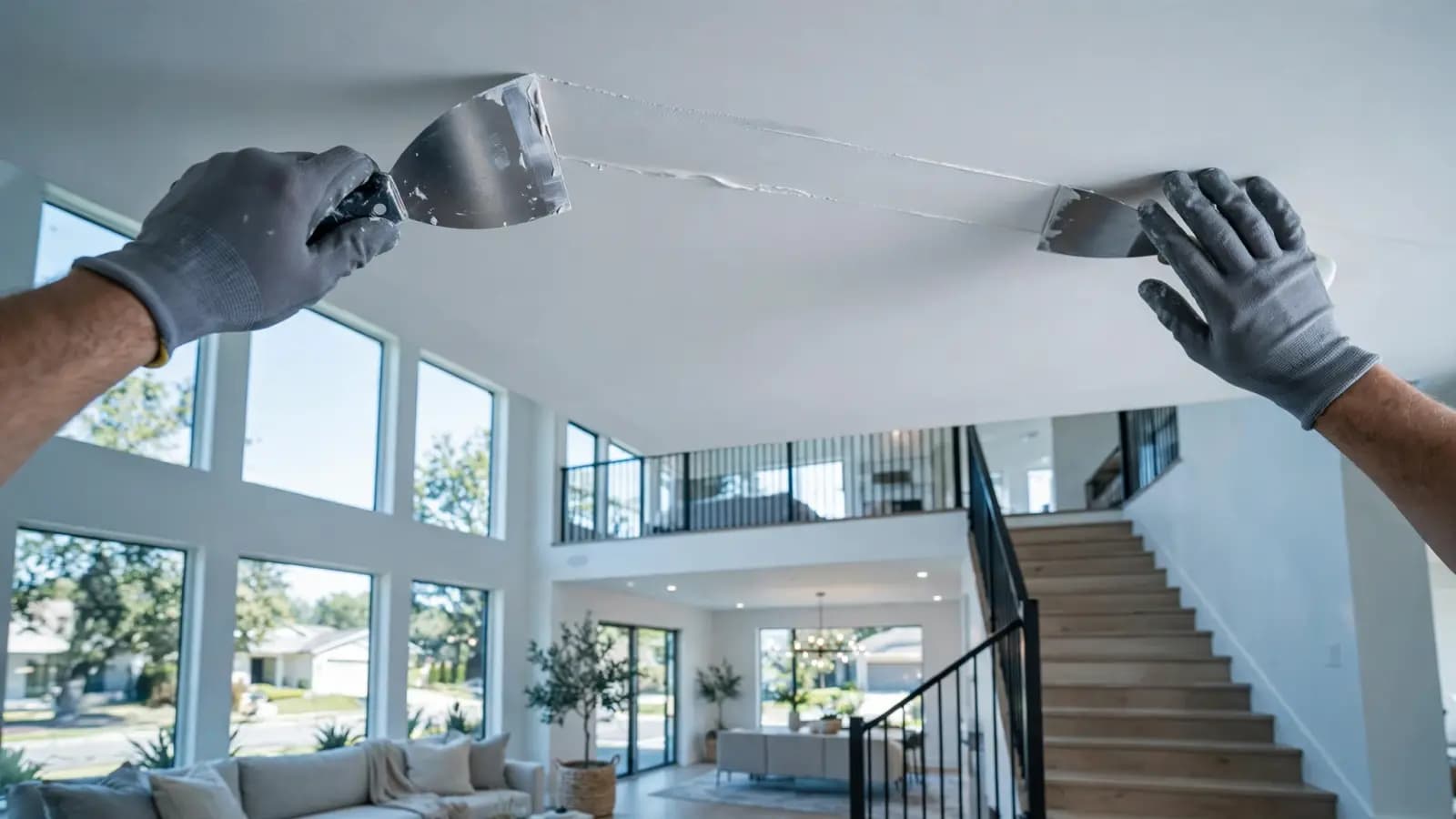
- How to repairThe full sequence from stopping the leak to the final coat of paint, with DIY limits marked.
- Repair or replaceDecision rules for keeping or replacing wet drywall, plus an interactive checker.
- Drying a ceilingDrying timelines, what speeds them up, and how to confirm a ceiling is actually dry.
- Fixing water stainsStain-blocking primers, painting technique, and covering stains on textured ceilings.
- Texture repairMatching knockdown, orange peel and popcorn textures over a patch.
- Leak source finderA step-by-step decision tree for narrowing down where the water comes from.
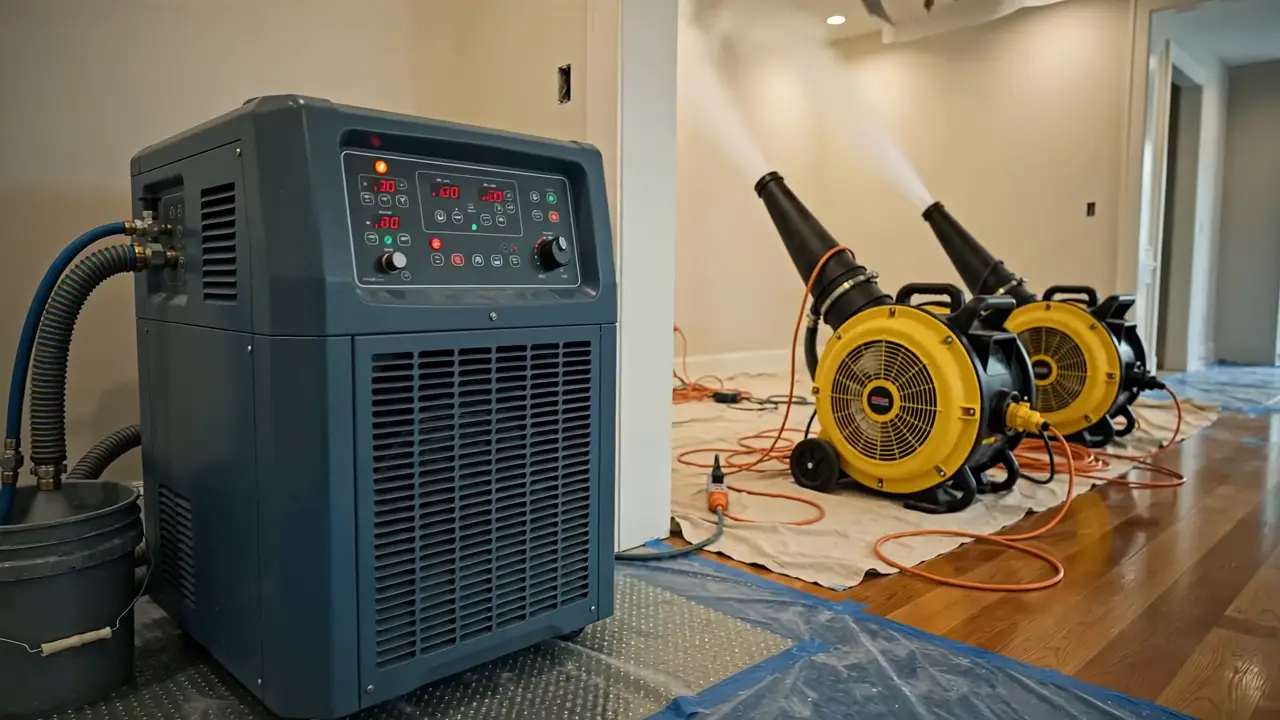
Dry before you repair
Paint and patches over damp drywall fail. Readings should match a dry area first.
How it works
Three steps from stain to solid ceiling
Step 1
Identify the symptom
Stain, bubble, drip or sag: each tells you how much water arrived and how urgent it is.
Step 2
Find and stop the source
Roof, plumbing, bathroom fixtures or AC condensate. The right trade stops the water.
Step 3
Dry, then repair
Dry the cavity, replace only what cannot be saved, then finish, prime and paint.
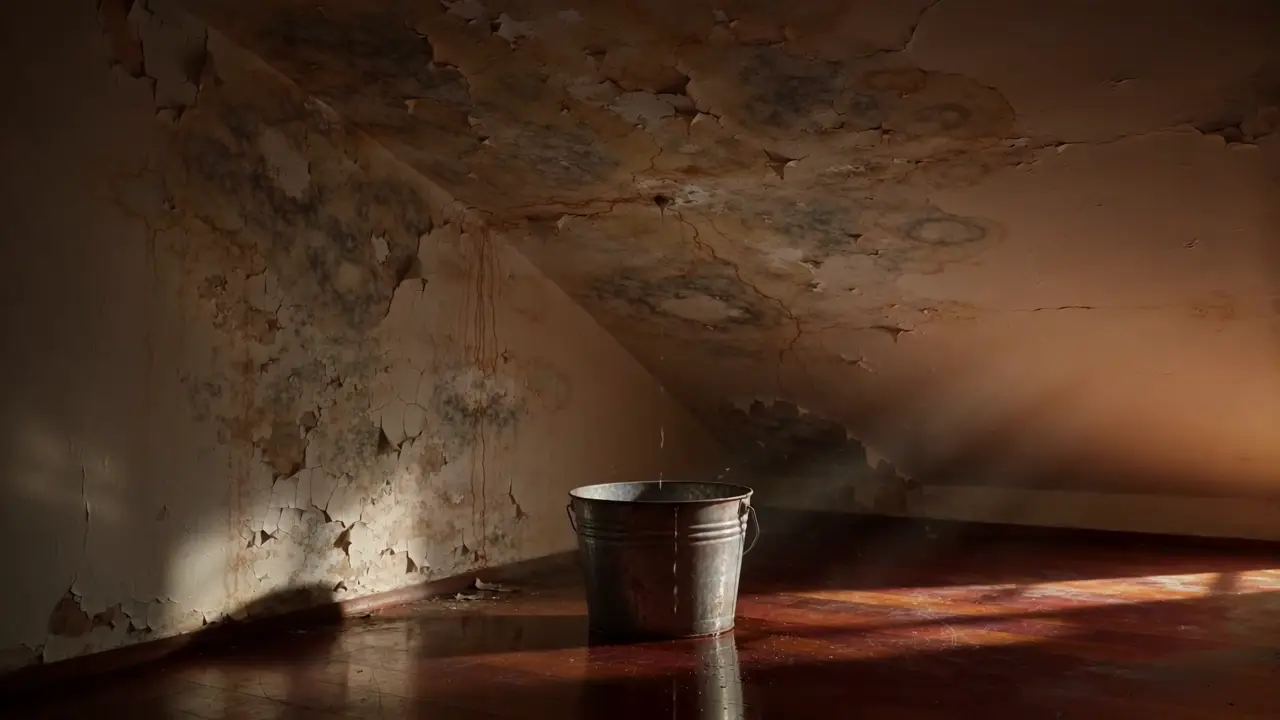
Water pouring through, or the ceiling bulging?
- 1Move everyone out from under the wet or sagging area.
- 2Don't touch wet lights or switches. Cut that circuit at the panel only from a dry spot.
- 3Shut off the water source or main valve, contain drips, then call for help.
Symptom finder
What is your ceiling doing?
Start with what you see. Each card explains what it means, the likely cause and the safe first step.
 CommonBrown water stainWhat brown or yellow rings mean, how to tell if the leak is still active, and when a stain is only cosmetic.
- CommonWet ceilingDamp or dark patches without dripping: where the moisture comes from and whether it will dry on its own.
 UrgentSagging ceilingDrooping or bulging drywall after a leak: why it happens, collapse risk, and safe next steps.
- Act todayBubbling paintBlisters and water-filled bubbles in ceiling paint: causes, what is safe, and how the repair works.
- CommonPeeling paintFlaking and peeling paint after a leak or from humidity: diagnosis and a repair that holds.
- UrgentDripping ceilingActive drips through the ceiling or a light fixture: safe first steps and how to trace the source.
- Act todaySoft drywallDrywall that gives or crumbles when pressed: what has failed inside the board and the repair path.
- Act todayCeiling moldSpots, fuzz or discoloration after a leak: how mold develops, what is safe to clean, and what needs a pro.
- CommonMusty smellAn earthy odor after a leak, with or without visible damage: what it means and how to find it.
 CommonCracked ceilingCracks along seams or stains after a leak: water cracks versus structural cracks.
Not sure? Narrow it down
Pick the symptom and the room to see the most likely sources and the guide to read first.
All ceiling problems1. What does your ceiling look like?
2. Where is it?
Choose a symptom and a location to see likely causes and guides.
Why use this guide
A better way to deal with a leaking ceiling
No sorting through ads and forum threads. Clear answers in the order you need them.
Safety first
Every guide flags electrical, collapse and contamination risks before anything else.
Diagnosis before repair
Symptom, source and severity first, so you fix the cause, not just the stain.
Material-specific
Drywall, plaster, drop and textured ceilings behave differently. The advice does too.
Free and independent
Guides are free. We do not perform repairs or sell equipment.
Ceiling types
Every ceiling reacts differently to water
Drywall softens and sags, plaster loses its grip on the lath, tiles stain fast, and older textures need testing before repair.
Materials and rooms
- Drywall ceilings
- Plaster ceilings
- Drop ceilings
- Textured & popcorn
- Basement ceilings
- Bathroom ceilings
- Kitchen ceilings
Ceiling damage guides
Answers before the contractor arrives
- SafetyCan a Water-Damaged Ceiling Collapse?
- Getting helpWho to Call for Ceiling Water Damage
- ToolsCeiling Water Damage Severity Chart
- ChecklistCeiling Water Damage Checklist
Good to know before you call anyone
What causes water damage on a ceiling?
Roof leaks, plumbing leaks from the floor above, overflowing or leaking bathroom fixtures, air-conditioning condensate overflows, water heater and appliance leaks, storms, and condensation. The location and timing of the stain usually point to which one.
Is ceiling water damage dangerous?
A dry stain is not. Active leaks, sagging or bulging drywall, water near light fixtures, and contaminated water are hazards: saturated ceilings can collapse, wet fixtures can shock, and damp materials can grow mold.
What does water damage on a ceiling look like?
Brown or yellow stains with darker rings, bubbling or peeling paint, cracks along seams, soft or sagging drywall, drips, mold spotting, and a musty smell.
Will a wet ceiling dry on its own?
Small, exposed areas often dry in a few days. Water trapped under insulation or between floors often does not dry quickly enough to prevent mold without dehumidifiers, airflow or opening the ceiling.
Can water-damaged ceiling drywall be saved?
Yes, if it was wetted by clean water, stayed firm and flat, and is dried promptly. Soft, sagging, moldy or contaminated drywall is replaced.
Who should I call for ceiling water damage?
The trade that stops the water first (plumber, roofer or HVAC technician), then a water damage restoration company for drying and repair. Add an electrician if water reached wiring.
More in the ceiling water damage FAQ.
Ceiling leaks · stains · sagging · mold
Have water damage on your ceiling?
The longer a ceiling stays wet, the more it costs to fix. Call now and get it handled.